

Marine Collagen vs Bovine Collagen

What Is Marine Collagen?
Marine collagen is sourced from fish, most commonly the skin and scales.
These collagen-rich materials are processed and hydrolysed, which simply means the collagen is broken down into smaller peptides. This helps it dissolve easily and makes it simple to add to water, coffee, smoothies or recipes.
Marine collagen is made up predominantly of Type I collagen, the most abundant type of collagen found in the human body.
Type I collagen is naturally found throughout the skin, bones, tendons and ligaments. This is why marine collagen is often chosen by people looking to support healthy skin, hair and nails, as well as general connective tissue health.
It may also suit pescatarians who are comfortable consuming fish-derived ingredients.

What Is Bovine Collagen?
Bovine collagen is sourced from cattle, usually from the hide.
Like marine collagen, it's generally hydrolysed into smaller collagen peptides that mix easily into food and drinks.
Bovine collagen naturally contains Types I and III collagen.
Type I collagen is found throughout the skin, bones, tendons and ligaments, while Type III is commonly found alongside it in skin, muscles, blood vessels and other connective tissues.
Because it provides both Types I and III, bovine collagen is commonly chosen by people looking for broad connective tissue support, including skin, joints and mobility.

What's the Difference Between Marine and Bovine Collagen?
The biggest difference is their source.
Marine collagen comes from fish, while bovine collagen comes from cattle. Their collagen profiles are also slightly different:
- Marine collagen is predominantly Type I.
- Bovine collagen generally contains Types I and III.
Beyond that, they have plenty in common.
Both marine and bovine collagen:
- Provide hydrolysed collagen peptides
- Contain amino acids such as glycine, proline and hydroxyproline
- Are high in protein
- Mix easily into drinks and recipes
- May support skin and connective tissue health
- Work best when taken consistently
So, while they’re often marketed for different purposes, there's plenty of crossover between the two.
What Are the Benefits of Marine Collagen?
Marine collagen is particularly popular in skin and beauty routines because it consists mainly of Type I collagen.
Type I is an important structural protein in the skin, and research suggests hydrolysed collagen peptides may support skin hydration, elasticity and the appearance of fine lines when taken regularly.
Marine collagen is commonly chosen by people looking to support:
- Healthy-looking skin
- Hair and nails
- Bones
- Tendons and ligaments
- General connective tissue health
That doesn’t mean marine collagen only benefits skin. Type I collagen is found throughout the body, so its role extends well beyond your beauty routine.

What Are the Benefits of Bovine Collagen?
Bovine collagen provides both Types I and III collagen, giving it a slightly broader collagen profile.
It's commonly used by people looking to support:
- Skin health
- Joints and mobility
- Tendons and ligaments
- Muscles and connective tissue
- General healthy ageing
Research into collagen peptides has also found potential benefits for joint comfort and function, particularly in active people and those experiencing age-related joint concerns.
Bovine collagen is often associated with joints, but it still contains plenty of Type I collagen, so it can also be a great option for skin-focused goals.

What Is the Best Collagen for Skin?
Marine collagen is often the first choice for skin because it contains predominantly Type I collagen.
However, bovine collagen also contains Type I, so both may support skin health.
The best collagen for skin may simply come down to your preferred source. You might choose marine collagen because you follow a pescatarian diet or prefer fish-derived ingredients. You may prefer bovine collagen because you want both Types I and III.
There’s no need to assume one will automatically deliver better results than the other.
What Is the Best Collagen for Joints?
Bovine collagen is commonly chosen for joint and connective tissue routines because it provides Types I and III collagen.
These collagen types are found throughout tendons, ligaments and other connective tissues, making bovine collagen a popular all-round option for active people and those focused on mobility.
Marine collagen still provides Type I collagen and collagen peptides, so it can also support a joint-focused routine.
Think of bovine collagen as a popular choice for this goal, rather than the only choice.

Is Marine Collagen Better Absorbed?
You may have heard that marine collagen is absorbed better because its peptides are smaller.
While peptide size can vary between collagen products, both marine and bovine collagen can be hydrolysed into small, easily digested peptides.
There isn’t enough evidence to say marine collagen will always be better absorbed or produce better results.
For most people, choosing a quality product and taking it consistently is more important than worrying about small differences between peptide sizes.
Is Collagen a Complete Protein?
Marine and bovine collagen are both high in protein, but neither is considered a complete protein.
Collagen does not contain all nine essential amino acids in the right amounts, so it should not replace complete protein sources such as whey, eggs, dairy, meat, fish or soy.
Instead, collagen works best as a specialised protein added alongside a balanced diet.
If muscle growth and recovery are your main goals, continue prioritising complete protein sources and treat collagen as an extra rather than your main protein powder.
Can You Take Marine and Bovine Collagen Together?
Yes, you can use both.
Marine and bovine collagen are simply different sources of collagen peptides. Some people choose one based on their dietary preferences, while others may alternate between them.
You don’t need to take both, but you can use them together or alternate between them if each suits a different part of your routine.

How to Choose the Best Collagen Supplement for You
There's no universal winner in the marine collagen vs bovine collagen debate.
The best collagen supplement is one that clearly identifies its source, contains hydrolysed collagen peptides and suits your goals, dietary preferences and daily routine.
Choose marine collagen when you:
- Prefer a fish-derived collagen
- Follow a pescatarian diet
- Want predominantly Type I collagen
- Are especially interested in skin, hair and nail support
Choose bovine collagen when you:
- Prefer a cattle-derived collagen
- Want both Types I and III collagen
- Are interested in skin, joints and broader connective tissue support
- Want a versatile everyday collagen
At Bulk Nutrients, we offer both options because different sources suit different people.
Our Marine Collagen is made from sustainably sourced, hydrolysed fish collagen. It has a neutral taste, mixes easily and is a simple choice for those looking for predominantly Type I collagen.
Our Collagen Protein is made with hydrolysed bovine collagen and naturally provides Types I and III. It’s a versatile option for people looking to support skin, joints and connective tissue as part of their everyday routine.
Both are easy to use, high in protein and designed to fit into drinks, smoothies and recipes without making life complicated.
The right choice is the one that suits your goals, dietary preferences and daily routine - and the one you’ll actually remember to take.

Nick is Bulk's Customer Service team's Technical Support Officer.
Which is our way of saying he's the guy whose job it is to answer your obscenely technical supplement questions.
More about Nick TelescaReferences:
References:
- Naomi R, Ridzuan PM, Bahari H. Current Insights into Collagen Type I. Polymers (Basel). 2021 Aug 9;13(16):2642. doi: 10.3390/polym13162642. PMID: 34451183; PMCID: PMC8399689. https://pmc.ncbi.nlm.nih.gov/articles/PMC8399689/
- Kuivaniemi H, Tromp G. Type III collagen (COL3A1): Gene and protein structure, tissue distribution, and associated diseases. Gene. 2019 Jul 30;707:151-171. doi: 10.1016/j.gene.2019.05.003. Epub 2019 May 7. PMID: 31075413; PMCID: PMC6579750. https://pmc.ncbi.nlm.nih.gov/articles/PMC6579750/
- de Miranda RB, Weimer P, Rossi RC. Effects of hydrolyzed collagen supplementation on skin aging: a systematic review and meta-analysis. Int J Dermatol. 2021 Dec;60(12):1449-1461. doi: 10.1111/ijd.15518. Epub 2021 Mar 20. PMID: 33742704. https://pubmed.ncbi.nlm.nih.gov/33742704/
- Kviatkovsky SA, Hickner RC, Cabre HE, Small SD, Ormsbee MJ. Collagen peptides supplementation improves function, pain, and physical and mental outcomes in active adults. J Int Soc Sports Nutr. 2023 Dec;20(1):2243252. doi: 10.1080/15502783.2023.2243252. PMID: 37551682; PMCID: PMC10411303. https://pmc.ncbi.nlm.nih.gov/articles/PMC10411303/
- Al Hajj W, Salla M, Krayem M, Khaled S, Hassan HF, El Khatib S. Hydrolyzed collagen: Exploring its applications in the food and beverage industries and assessing its impact on human health - A comprehensive review. Heliyon. 2024 Aug 16;10(16):e36433. doi: 10.1016/j.heliyon.2024.e36433. PMID: 39253251; PMCID: PMC11381813. https://pmc.ncbi.nlm.nih.gov/articles/PMC11381813/
- Paul C, Leser S, Oesser S. Significant Amounts of Functional Collagen Peptides Can Be Incorporated in the Diet While Maintaining Indispensable Amino Acid Balance. Nutrients. 2019 May 15;11(5):1079. doi: 10.3390/nu11051079. PMID: 31096622; PMCID: PMC6566836. https://pmc.ncbi.nlm.nih.gov/articles/PMC6566836/
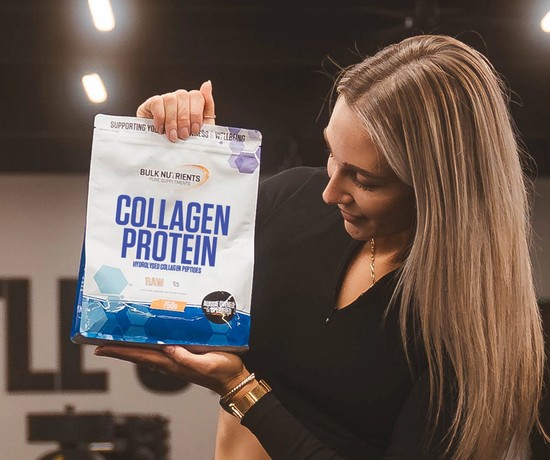
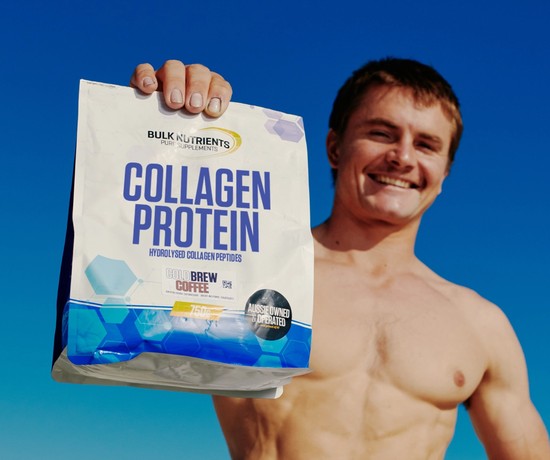


Collagen Protein
$50.00