

How to Set Up Your Macros for Max Muscle Gain

The definition of macronutrients:
/ macronutrient /
Noun. BIOLOGY
Nutrients that provide calories/energy and are required in large amounts within the diet to sustain bodily functions and daily activities.
The 3 macronutrients that we are going to discuss are:
- PROTEIN
- CARBOHYDRATE
- FAT
The proportions of these macronutrients consumed in relation to our daily calorie allowance, as well as the absolute amounts consumed have the potential to significantly impact the muscle gaining process, and outcomes.
Calories are king, but macros are queen. They matter! And thus, I will discuss each macronutrient individually with a specific explanation of my rationale for why certain macronutrients should be consumed in particular quantities to optimise muscle gaining.

Protein is essential for our body to create muscle
Consuming protein supplies the body with amino acids that function as the building blocks of muscle and prevent muscle breakdown. Without consuming adequate protein, we will not be able to turn on the muscle growth “light switch” known as muscle protein synthesis, and muscle growth will become very hard if not impossible.
Remember, lifting weights is the stimulus for muscle adaptation, but it is the nutrients (specifically protein) that are required to facilitate that adaptation. Think of it this way, you wouldn’t take over a hamper of muffins to your neighbour if you knew no one was going to be home to receive them!
Current published research suggests that the minimum intake of dietary protein for health purposes is 1-1.3 grams per kilogram of body weight. While this intake might be appropriate to sustain health, it WILL NOT be sufficient for building muscle.
How to structure your protein intake
Research studies and meta-analyses tells us that the upper effective range of daily protein intake to support muscle growth is in fact 1.8-2.0 grams per kilogram of body weight. So, scientists have told us that increasing our daily protein intake from 1g per kg of body weight to 2g per kg of body weight will result in greater muscle growth.
Should we then increase our protein intake to 3 or 4g per kg of body weight, to increase muscle gain further? Not necessarily.
Researchers have tackled this question and have concluded that while extra protein is not unhealthy and will not detract from muscle growth, beyond a certain limit (around 2.0g per kg) there is a minimal contribution to extra anabolism (gains). It is also important to note that if you take your protein intake too high, you might have an insufficient remainder of calories to adequately satisfy carbohydrate and fat needs (which both serve a purpose as we will discuss next).
On the flip side, some people might still prefer to take their protein intake beyond the 2.2g per kg upper limit, as protein is the most satiating macronutrient (meaning it makes hunger management easier) and has been shown to cause the least fat gain when caused in excess, compared to excess carbohydrates or fats.
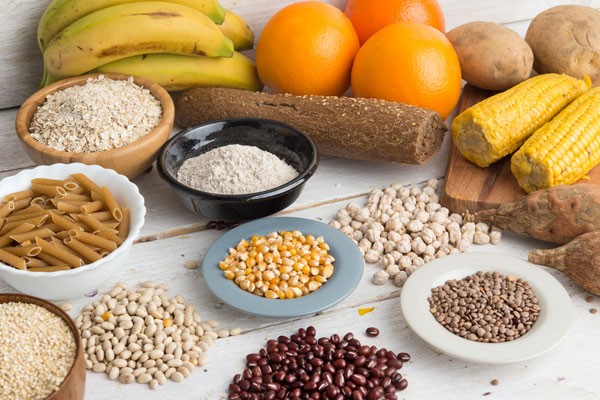
Carbohydrates fuel our body when we workout
Think of carbohydrates as the fuel for our rocket. Carbohydrates provide a fast and efficient energy source to sustain the hard workouts that indirectly lead to muscle growth (remember we must create the growth stimulus first in the gym, then facilitate it with nutrition afterward).
When we are training hard, the carbohydrates used to support these high-intensity efforts come from blood glucose (a little) and liver glycogen (some), but mostly from muscle glycogen. Think of muscle glycogen as the main storage centre for carbohydrates in the body, with these storage centres able to be unlocked and accessed when needed.
Generally, we want these storage centres to always be at maximum capacity with carbohydrates, as research shows us that when muscle glycogen is low, workout performance suffers, and muscle protein synthesis is reduced.
In addition to sustaining muscle glycogen content, carbohydrates are also important for the nervous system and the brain. This is because the nervous system and many of its functions depend on glucose as its main energy source. Without an adequate carbohydrate intake, brain function and nervous system function (particularly the sympathetic nervous system) can become compromised.
A final reason to allocate a reasonable chunk of your bulking calories towards carbohydrates is that they activate insulin-mediated anabolic pathways. While carbohydrates don’t increase muscle protein synthesis per se, research has shown that they are potent inhibitors of muscle protein breakdown. Growing muscle requires a positive net balance between muscle protein synthesis and muscle protein breakdown, so even if you aren’t increasing protein synthesis, reducing protein breakdown will tip the scales further in your muscle building favour!
How to structure your carbohydrate intake
Generally, nutrition experts agree that a daily carbohydrate intake between 1 gram and 3 grams per kilogram of body weight is the minimum intake required to adequately support muscle growth, assuming that a calorie surplus is established. If you do light training/workouts (i.e., less than 10 sets per session) it is likely that you would be closer to the 1 gram per kg minimum intake of carbohydrates. However, if you were completing more than 10 hard sets in a session, it is expected that 3 grams per kg would be closer to your minimum carbohydrate requirement for growth.
So, we discussed minimal intakes, but what about optimal? How much carbohydrate should we be consuming if we want the best muscle gain results possible?
For most people training hard in the gym for ~1 hour or more per session, approximately 4 grams of carbohydrate per kg of your body weight will be required to optimise performance and muscle growth. It is important to note however that some people will require a daily carbohydrate intake much higher than this, pushing into the 5-7 grams per kilogram of body weight range.
Why do some people need so much? Well, as we progress through a bulk accruing body weight, our metabolic capacity and calorie demands increase also. With enough time spent in a chronic calorie surplus and enough muscle added, eventually, very high carbohydrate intakes will be required to re-establish the calorie surplus, and to support the individual’s increased weight maintenance energy requirements.
Is there an excessive carbohydrate intake like there is for protein?
Is there an amount we shouldn’t go beyond?
‘Experts’ have suggested that a carbohydrate intake in excess of 5 grams per kg of body weight is unnecessary. It can be for some people, but for others, it might be very necessary. Your carbohydrate intake should be based upon your daily calorie needs and your weekly weight progressions while bulking. If you are gaining weight within your targeted weekly gain range then you have nothing to worry about, your carbohydrate intake IS NOT excessive. On the flip side, if you are packing on kilos of body weight per week, then I would probably cut out a few bagels from your program.

Fats help our body to produce hormones
The importance of dietary fats in the context of a muscle gain diet is highly debated. It is true that a minimum intake of essential fatty acids is required for survival and optimal health. As fats regulate hormone production and chemical messengers, a diet insufficient in essential fatty acids can lead to decreased testosterone levels (definitely not what we want when trying to build muscle).
With this fact considered, there is a line of thinking that suggests a diet HIGH in dietary fats would have a stimulatory impact on testosterone levels, thus theoretically improving the rate of muscle gain. However, this is not the case, research has confirmed that an intake of dietary fats above minimum requirements does not increase testosterone. In fact, eating more than the minimum physiological requirements for fats does very little to assist the muscle gain process apart from making the diet taste nicer.
How to structure your fat intake
As fats are a very poor fuel for high intensity workouts, and they do not impact anabolic pathways, targeting the minimum intake of fats is likely optimal for muscle growth. How much is the minimum you might ask? Generally, most experts agree that if derived from healthy fat sources (e.g., monounsaturated, and polyunsaturated fats), approximately 0.5 grams per kg of body weight is sufficient. There are however a few occasions in which someone might want to consume a dietary fat intake in excess of this figure.
As fats are the most energetically dense nutrient (they contain the most calories per gram), this means that fats are the “easiest” way to consume calories without feeling full. Fats like peanut butter, cheese, mayonnaise, and fatty cuts of meat can also significantly improve the taste and calorie density of meals, with minimal change in overall food volume.
So, if you find yourself at the stage of a bulk where consuming the necessary calories to grow has become difficult (due to reductions in appetite, and changes in palate), then incorporating some more fats into the diet can be helpful.
References:
Phillips, S. M., & Van Loon, L. J. (2011). Dietary protein for athletes: from requirements to optimum adaptation. Journal of sports sciences, 29 Suppl 1, S29–S38. https://doi.org/10.1080/02640414.2011.619204
Jäger, R., Kerksick, C.M., Campbell, B.I. et al. International Society of Sports Nutrition Position Stand: protein and exercise. J Int Soc Sports Nutr 14, 20 (2017). https://doi.org/10.1186/s12970-017-0177-8
Burke, L. M., Hawley, J. A., Wong, S. H., & Jeukendrup, A. E. (2011). Carbohydrates for training and competition. Journal of sports sciences, 29 Suppl 1, S17–S27. https://doi.org/10.1080/02640414.2011.585473
Pramuková, B., Szabadosová, V., & Soltésová, A. (2011). Current knowledge about sports nutrition. The Australasian medical journal, 4(3), 107–110. https://doi.org/10.4066/AMJ.2011.520




Muscle Food 101
$64.00
Protein Matrix+
$57.00