

How to Build a Supplement Stack That Matches Your Goal

Why Most Supplement Stacks Miss the Mark
Most people don’t need more supplements. They need a better reason for the ones they’re already taking.
That’s where plenty of stacks come unstuck. Instead of starting with a clear goal, people build around trends, gym-floor tips, half-remembered podcast advice, or whatever product is making the most noise online.
A smarter approach is to work backwards from the result you want. A stack for sleep and recovery should not look the same as one built for performance, gut health, or focus.
Because when everything gets lumped into the same routine, it’s easy to end up taking more without getting much closer to the goal.
Start With the Goal, Then Build Smart
A smart supplement stack is about knowing what deserves a place.
One of the easiest ways to make sense of supplementation is to sort ingredients into three simple categories:
Foundational ingredients
These are your starting point. They have the strongest evidence, the clearest purpose, and the best reason to be in your stack.
Supportive ingredients
These can be useful additions, but they’re not always essential. They work best when they solve a specific problem or round out a routine that already has the basics covered.
Optional ingredients
These may be promising or useful in the right context, but they’re not where most people need to begin.
This kind of stack logic keeps the focus on what’s most useful for your goal, rather than how many products you can squeeze into one routine.
Some ingredients can support more than one goal, and that’s not a bad thing. Creatine can make sense in both a performance stack and a healthy ageing setup. Magnesium can show up in recovery, sleep, and general wellbeing. The important part is knowing why each ingredient is there.

Sleep And Recovery
Recovery is where a lot of good training either pays off or quietly falls apart.
A recovery-focused stack should support the basics: quality rest, muscle function, and your ability to bounce back between sessions.
Magnesium
Magnesium is one of the most sensible places to start in a sleep and recovery stack. It supports muscle function, nervous system regulation, and energy metabolism, so it’s already doing plenty of useful behind-the-scenes work.
There’s some promising human research here too. In one randomised, placebo-controlled trial, adults with self-reported sleep difficulties saw meaningful improvements after supplementing with magnesium, including better overall sleep quality, fewer nighttime wake-ups, and better daytime functioning.
So, while magnesium isn’t a magic sleep switch, it can offer very practical support when better recovery is the goal.
It’s also worth knowing that magnesium comes in a few different forms, and they’re not all identical. You don’t need a PhD in magnesium forms, but it’s worth knowing that the type used can make a difference.
Collagen
Collagen can also make sense in a recovery stack, but for a different reason. It’s not a replacement for complete protein, so it shouldn’t be mistaken for a muscle-building heavyweight. Where it tends to be more useful is in connective tissue and broader musculoskeletal support.
Research suggests collagen peptides may help support muscle recovery, strength, and markers of muscle stress, particularly when paired with training.
If connective tissue support is part of the goal, a collagen-based product such as Collagen Protein and Marine Collagen can be a practical way to work this into a recovery routine.

ZMA
For people who prefer a combined mineral formula rather than separate products, something like ZMA Powder can be a convenient option.
Because zinc and magnesium are both involved in processes linked to muscle function, energy metabolism, and overall recovery support, a product like ZMA can be a practical option when convenience is important. It’s best viewed as a combined mineral support formula that may suit a night-time routine, rather than a magic sleep fix.
Because ZMA already contains magnesium, it’s usually best treated as an alternative to standalone magnesium rather than something you automatically stack on top.
Strength And Performance
This is one of the clearest categories in sports nutrition, because some ingredients have genuinely earned their stripes.
If your goal is to lift more, train harder, and get more out of repeated high-intensity efforts, a smart stack starts with the ingredients backed by the strongest human evidence.
Creatine Monohydrate
Creatine Monohydrate is one of the best places to start if your goal is strength, power, and better training output. It helps increase phosphocreatine stores in muscle, which supports rapid ATP regeneration during high-intensity exercise. In practical terms, that helps your body produce energy more efficiently during short, hard efforts.
It’s also one of the most researched sports supplements available. In fact, the International Society of Sports Nutrition describes creatine monohydrate as the most effective ergogenic supplement for increasing high-intensity exercise capacity and lean body mass during training.
That can translate to better training performance, improved strength, and greater support for lean mass gains over time when paired with resistance training. Recent meta-analyses have backed this up, showing significantly greater strength gains when creatine is combined with resistance training rather than training alone.

Beta-Alanine
Beta-Alanine is another evidence-backed ingredient, but it has a more specific role. It helps increase muscle carnosine, which supports the body’s ability to buffer acidity during hard efforts. It can be particularly useful when your training involves repeated bursts, circuits, and higher-volume work where fatigue starts creeping in.
Research suggests its sweet spot is efforts lasting around one to four minutes, so it’s better suited to gritty, high-intensity sessions than a one-rep-max moment.
Citrulline
Citrulline works well as a supportive addition rather than the centrepiece of the stack. By increasing arginine availability, it may help support nitric oxide production, blood flow, exercise tolerance, and overall session quality.
The research here is promising, with some studies suggesting citrulline malate may help improve training volume and repetition performance.
Gut Health And Immunity
Gut health is one of the most talked-about topics in supplementation, and one of the easiest to overcomplicate.
Part of the reason is that “gut health” can mean different things to different people, from regularity and digestive comfort to microbiome support. Add immunity into the mix, and it gets even harder to know what actually deserves a place in your stack.
Fibre
Fibre is probably the least flashy part of a gut stack, but it’s often the most sensible place to start. It helps support bowel regularity and also acts as fuel for beneficial gut microbes.
Research suggests fibre can influence gut microbiota composition and digestive outcomes, though the effects depend on the type of fibre, the dose, and the individual.
If gut support is the goal, a fibre product such as Tri Fibre+ can make great sense as a starting point.
Probiotics
Probiotics can also make sense here, but with one important catch: they’re strain-specific. Not all probiotics do the same thing, and they shouldn’t be treated as one interchangeable category.
Certain probiotic strains may support digestive health and may also help reduce the incidence, duration, or severity of some upper respiratory tract infections in certain groups. In other words, they can be useful, but only when the strain matches the job you want it to do.
Greens
Greens powders can have a place in a gut-focused stack, especially as a convenience option. They typically contain a blend of plant-based ingredients such as barley grass, wheat grass, spirulina, chlorella, and vegetable powders.
For people wanting a convenient nutritional top-up, a greens blend such as Green Fusion can help round out the picture, but it still makes more sense as optional support than the foundation of a gut stack.

Cognitive Support And Focus
Some days you need your brain to fire on all cylinders.
That’s where a focus stack can be useful. Not because it turns you into a genius overnight, but because a few ingredients may help support alertness, attention, and performance when you’re mentally or physically under the pump.
Caffeine
Caffeine is the obvious place to start, and for good reason. It remains one of the most effective and best-supported ingredients for alertness and performance. It works mainly by blocking adenosine receptors, which helps reduce feelings of fatigue and improve wakefulness.
It also has strong evidence supporting its effects on exercise performance, along with useful support for attention, vigilance, and mental sharpness.
Tyrosine
Tyrosine is more context-dependent, but it can still be useful in the right setup. As a precursor to catecholamines like dopamine and noradrenaline, it’s most interesting when the brain is under a bit of pressure.
The research is mixed overall, but the more promising findings tend to show up in stressful, fatiguing, or cognitively demanding conditions rather than on your average low-stress day.
That means it may be more relevant for high-pressure days than as a daily non-negotiable.
L-Theanine
L-Theanine could also earn a spot here as an optional addition, especially when the goal is calmer, cleaner focus rather than pure stimulation. It’s an amino acid commonly found in tea, and research suggests it may help support attention and stress-related cognitive performance in some settings, although the evidence is still more promising than definitive.
That makes it less of a foundation ingredient than caffeine, but still a useful extra when the aim is steadier focus rather than simply more stimulation.
Healthy Ageing
“Longevity” is one of those words that can go from sensible to silly very quickly.
A more grounded way to think about healthy ageing is to focus on the things that matter most over time: muscle function, mobility, recovery, nutritional support, and staying capable for longer.

Creatine
Creatine deserves another mention here because it’s not just for training performance. It also makes a lot of sense in a healthy ageing conversation, particularly because maintaining muscle mass, strength, and physical function becomes increasingly important as we get older.
Research suggests creatine, especially when paired with resistance training, may help support lean mass, strength, and functional ability, which gives it a pretty solid case for being here too.
Magnesium
Magnesium also earns a place here because muscle function, nervous system regulation, and sleep quality do not stop mattering with age.
Research continues to point to magnesium’s broader relevance in healthy ageing, especially given how common low magnesium intake can be in older adults.
That doesn’t make it a miracle ingredient, but it does make it a sensible support option when the goal is to keep the basics working well for longer.
Collagen
Collagen can also fit into a healthy ageing stack, but more as an optional support ingredient than a cornerstone. The clearest human evidence is around skin hydration and elasticity, with systematic reviews and meta-analyses finding benefits from oral hydrolysed collagen in those areas.
That gives it a reasonable place in the mix, especially when skin or connective tissue support is part of the goal.
Build Your Stack With Purpose
Once you understand the goal-first approach, building your own supplement stack becomes much simpler.
Start with the outcome, choose evidence-backed foundations, and only add supportive ingredients when they genuinely serve a purpose. Keep it relevant, keep it practical, and keep it simple enough to stick with.
Because a smarter supplement stack isn’t about taking more. It’s about taking what makes sense.
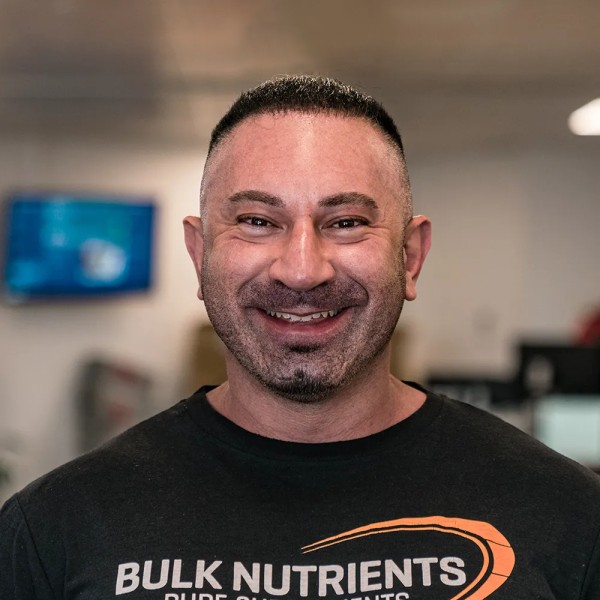
Nick is Bulk's Customer Service team's Technical Support Officer.
Which is our way of saying he's the guy whose job it is to answer your obscenely technical supplement questions.
More about Nick TelescaReferences:
- Hausenblas HA, Lynch T, Hooper S, Shrestha A, Rosendale D, Gu J. Magnesium-L-threonate improves sleep quality and daytime functioning in adults with self-reported sleep problems: A randomized controlled trial. Sleep Med X. 2024 Aug 17;8:100121. doi: 10.1016/j.sleepx.2024.100121. Erratum in: Sleep Med X. 2025 Jun 03;9:100141. doi: 10.1016/j.sleepx.2025.100141. PMID: 39252819; PMCID: PMC11381753. https://pmc.ncbi.nlm.nih.gov/articles/PMC11381753/
- Inacio PAQ, Gomes YSM, de Aguiar AJN, Lopes-Martins PSL, Aimbire F, Leonardo PS, Sá Filho AS, Lopes-Martins RAB. The Effects of Collagen Peptides as a Dietary Supplement on Muscle Damage Recovery and Fatigue Responses: An Integrative Review. Nutrients. 2024 Oct 8;16(19):3403. doi: 10.3390/nu16193403. PMID: 39408370; PMCID: PMC11478671. https://pmc.ncbi.nlm.nih.gov/articles/PMC11478671
- Magnesium and Zinc as Vital Micronutrients Enhancing Athletic Performance and Recovery – a Review doi: 10.12775/QS.2024.33.56021 https://www.researchgate.net/publication/385977595_Magnesium_and_Zinc_as_Vital_Micronutrients_Enhancing_Athletic_Performance_and_Recovery_-_a_Review
- Saito S, Cao DY, Okuno A, Li X, Peng Z, Kelel M, Tsuji NM. Creatine supplementation enhances immunological function of neutrophils by increasing cellular adenosine triphosphate. Biosci Microbiota Food Health. 2022;41(4):185-194. doi: 10.12938/bmfh.2022-018. Epub 2022 Jun 17. PMID: 36258765; PMCID: PMC9533032. https://pmc.ncbi.nlm.nih.gov/articles/PMC9533032
- Kreider RB, Kalman DS, Antonio J, Ziegenfuss TN, Wildman R, Collins R, Candow DG, Kleiner SM, Almada AL, Lopez HL. International Society of Sports Nutrition position stand: safety and efficacy of creatine supplementation in exercise, sport, and medicine. J Int Soc Sports Nutr. 2017 Jun 13;14:18. doi: 10.1186/s12970-017-0173-z. PMID: 28615996; PMCID: PMC5469049. https://pubmed.ncbi.nlm.nih.gov/28615996/
- Wang Z, Qiu B, Li R, Han Y, Petersen C, Liu S, Zhang Y, Liu C, Candow DG, Del Coso J. Effects of Creatine Supplementation and Resistance Training on Muscle Strength Gains in Adults <50 Years of Age: A Systematic Review and Meta-Analysis. Nutrients. 2024 Oct 28;16(21):3665. doi: 10.3390/nu16213665. PMID: 39519498; PMCID: PMC11547435. https://pubmed.ncbi.nlm.nih.gov/39519498/
- Trexler ET, Smith-Ryan AE, Stout JR, Hoffman JR, Wilborn CD, Sale C, Kreider RB, Jäger R, Earnest CP, Bannock L, Campbell B, Kalman D, Ziegenfuss TN, Antonio J. International society of sports nutrition position stand: Beta-Alanine. J Int Soc Sports Nutr. 2015 Jul 15;12:30. doi: 10.1186/s12970-015-0090-y. PMID: 26175657; PMCID: PMC4501114. https://pubmed.ncbi.nlm.nih.gov/26175657/
- Gonzalez AM, Trexler ET. Effects of Citrulline Supplementation on Exercise Performance in Humans: A Review of the Current Literature. J Strength Cond Res. 2020 May;34(5):1480-1495. doi: 10.1519/JSC.0000000000003426. PMID: 31977835. https://pubmed.ncbi.nlm.nih.gov/31977835/
- Vårvik FT, Bjørnsen T, Gonzalez AM. Acute Effect of Citrulline Malate on Repetition Performance During Strength Training: A Systematic Review and Meta-Analysis. Int J Sport Nutr Exerc Metab. 2021 Jul 1;31(4):350-358. doi: 10.1123/ijsnem.2020-0295. Epub 2021 May 19. PMID: 34010809. https://pubmed.ncbi.nlm.nih.gov/34010809/
- Fu J, Zheng Y, Gao Y, Xu W. Dietary Fiber Intake and Gut Microbiota in Human Health. Microorganisms. 2022 Dec 18;10(12):2507. doi: 10.3390/microorganisms10122507. PMID: 36557760; PMCID: PMC9787832. https://pmc.ncbi.nlm.nih.gov/articles/PMC9787832/
- Sarita B, Samadhan D, Hassan MZ and Kovaleva EG (2025) A comprehensive review of probiotics and human health-current prospective and applications. Front. Microbiol. 15:1487641. doi: 10.3389/fmicb.2024.1487641 https://www.frontiersin.org/journals/microbiology/articles/10.3389/fmicb.2024.1487641
- Guest NS, VanDusseldorp TA, Nelson MT, Grgic J, Schoenfeld BJ, Jenkins NDM, Arent SM, Antonio J, Stout JR, Trexler ET, Smith-Ryan AE, Goldstein ER, Kalman DS, Campbell BI. International society of sports nutrition position stand: caffeine and exercise performance. J Int Soc Sports Nutr. 2021 Jan 2;18(1):1. doi: 10.1186/s12970-020-00383-4. PMID: 33388079; PMCID: PMC7777221. https://pmc.ncbi.nlm.nih.gov/articles/PMC7777221/
- Jongkees BJ, Hommel B, Kühn S, Colzato LS. Effect of tyrosine supplementation on clinical and healthy populations under stress or cognitive demands--A review. J Psychiatr Res. 2015 Nov;70:50-7. doi: 10.1016/j.jpsychires.2015.08.014. Epub 2015 Aug 25. PMID: 26424423. https://pubmed.ncbi.nlm.nih.gov/26424423/
- Mátyus RO, Szikora Z, Bodó D, Vargáné Szabó B, Csupor É, Csupor D, Tóth B. Promising, but Not Completely Conclusive-The Effect of l-Theanine on Cognitive Performance Based on the Systematic Review and Meta-Analysis of Randomized Placebo-Controlled Clinical Trials. J Clin Med. 2025 Oct 30;14(21):7710. doi: 10.3390/jcm14217710. PMID: 41227106; PMCID: PMC12609247. https://pubmed.ncbi.nlm.nih.gov/41227106/
- Candow DG, Moriarty T. Effects of Creatine Monohydrate Supplementation on Muscle, Bone and Brain- Hope or Hype for Older Adults? Curr Osteoporos Rep. 2024 Nov 1;23(1):1. doi: 10.1007/s11914-024-00895-x. PMID: 39509039. https://pubmed.ncbi.nlm.nih.gov/39509039/
- Zhuang Z, Huang S, Xiong Y, Peng Y, Cai S. Association of magnesium depletion score with serum anti-aging protein Klotho in the middle-aged and older populations. Front Nutr. 2025 Mar 27;12:1518268. doi: 10.3389/fnut.2025.1518268. PMID: 40212717; PMCID: PMC11984463. https://pmc.ncbi.nlm.nih.gov/articles/PMC11984463/
- Pu SY, Huang YL, Pu CM, Kang YN, Hoang KD, Chen KH, Chen C. Effects of Oral Collagen for Skin Anti-Aging: A Systematic Review and Meta-Analysis. Nutrients. 2023 Apr 26;15(9):2080. doi: 10.3390/nu15092080. PMID: 37432180; PMCID: PMC10180699. https://pubmed.ncbi.nlm.nih.gov/37432180/




ZMA Powder
$22.00
Creatine Monohydrate
$24.00
Tri Fibre+
$22.00
Collagen Protein
$50.00
Digestive Fusion
$49.00