
Longevity Is Built in Boring Moments

What Does Healthy Ageing Actually Mean?
Healthy ageing isn't just about living for as long as possible. It's also about maintaining the physical and mental capacity to keep doing the things that matter to you as you get older.
The World Health Organisation defines healthy ageing as developing and maintaining the functional ability that enables wellbeing in older age. In practical terms, that can mean staying mobile, maintaining independence, managing everyday tasks and continuing to participate in the activities you value.
There isn't one food, workout or supplement that can guarantee that outcome. Genetics, environment, health conditions and plenty of other factors influence how we age.
What we can influence are many of the habits that support our health along the way.

Strength Training for Healthy Ageing
Strength training is one of the most practical habits to include in a healthy ageing routine because maintaining muscle strength and physical function becomes increasingly important as we get older.
Australia's current movement guidelines recommends moderate-to-vigorous physical activity for 30 minutes or more on most days, muscle-strengthening activities on at least two days per week and functional activities targeting mobility, balance and coordination on at least three.
That doesn't mean every week needs to resemble a training camp. A brisk walk, lifting weights, cycling, swimming, gardening, playing sport and generally spending more time moving all have a place.
Research has also associated resistance training with a lower risk of all-cause mortality, although that doesn't mean lifting weights itself guarantees a longer life.
Its more immediate value is easier to see: strength helps with the things you need your body to do. Carry the shopping. Climb stairs. Lift things. Get off the floor. Keep training.
You don’t need to become a powerlifter, but retaining the capability to continue with the activities you enjoy would be nice.
Protein and Muscle for Healthy Ageing
Protein is important for healthy ageing because it provides the amino acids your body uses to build and maintain muscle tissue. If strength training is giving your muscles a reason to stick around, your diet needs to give them something to work with.
Research in older adults suggests that adding protein supplementation to resistance training can provide some additional benefit for muscle mass, although results vary and the training itself remains an important part of the equation.
Most protein can come from regular foods such as meat, fish, eggs, dairy, soy and legumes. Protein powder simply gives you another convenient option when getting enough from food alone isn't practical.
Whey Protein Concentrate (WPC) is a versatile everyday whey option with a strong protein-per-dollar proposition. Whey Protein Isolate (WPI) provides a higher percentage of protein with much of the fat and lactose filtered out, while Earth Protein combines pea, rice and fava bean proteins for a plant-based alternative.

Creatine and Healthy Ageing
Creatine is increasingly being studied in healthy ageing, particularly for its potential to support strength when combined with resistance training in older adults.
A 2025 systematic review and meta-analysis involving older adults found that combining creatine with resistance training can have a positive impact on functional performance and body composition.
That distinction is important. Creatine isn't a substitute for strength training; it's something that can sit alongside it.
Creatine comes in different forms, including powders, capsules, and creatine gummies. The best creatine for your routine may simply be the format you find easiest to take consistently.
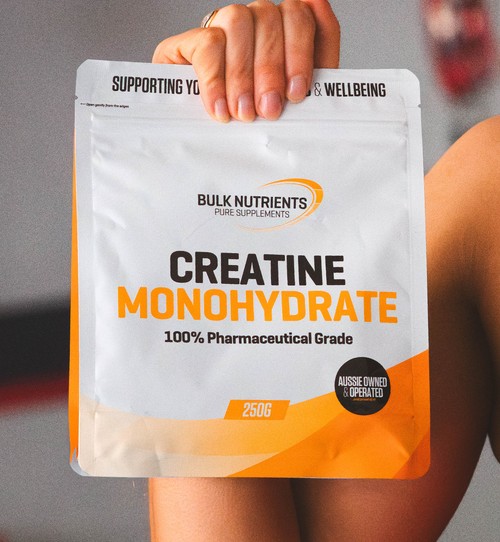
Bulk Nutrients Creatine Monohydrate powder provides 3g of creatine monohydrate per serve and can be worked into something you're already having each day, like a protein shake or smoothie. Or try our new easy-to-have Creatine Gummies.
Why Fibre Matters for Healthy Ageing
A healthy ageing diet isn't just about getting enough protein. Fibre-rich foods also deserve regular space on the menu.
Fruit, vegetables, legumes, wholegrains, nuts and seeds provide dietary fibre alongside a much wider range of nutrients and plant compounds. A large series of systematic reviews and meta-analyses published in The Lancet found that higher dietary fibre intakes were associated with lower rates of several chronic diseases and all-cause mortality.
The practical advice is considerably less complicated than the research. Add fruit to breakfast, choose wholegrains more often, put another vegetable on your plate and make space for beans, lentils and chickpeas.
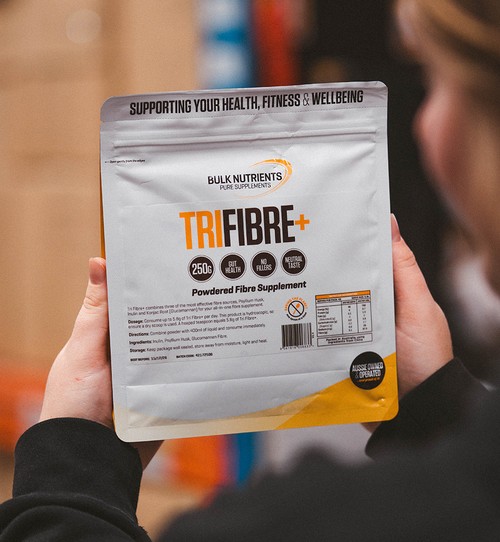
If your usual diet still comes up short, Tri Fibre+ provides 5.1g of dietary fibre per serve from inulin, psyllium husk and glucomannan and can provide a convenient top-up.

Sleep and Recovery for Healthy Ageing
Sleep is important at any age, and that shouldn’t change as you get older.
Australian guidelines recommend 7–8 hours of good-quality sleep for older adults, with reasonably consistent bed and wake times.
But you don't need to turn sleep into another performance metric or panic because you had one terrible night. Make enough time for sleep, keep your routine reasonably consistent where you can and create an environment that gives sleep a decent chance of happening.
Magnesium often comes up in conversations about sleep and recovery. It's an essential mineral involved in a wide range of normal functions in the body and found in abundance in dark leafy greens (like spinach), nuts, seeds, legumes, and whole grains. If your diet doesn’t typically contain a lot of those foods, supplements can be an easy way to make sure you’re getting enough.
Research has found an association between magnesium status and several measures of sleep quality, including sleep duration and daytime sleepiness. However, clinical trials of magnesium supplementation have produced mixed results, so more high-quality research is still needed to understand exactly how supplementation may influence sleep.
Glycine is another ingredient being researched in relation to sleep and healthy ageing. It’s found in protein-rich foods such as meat, fish, dairy, legumes, and connective-tissue sources like bone broth. It can also be found in supplement form, commonly as a powder or capsule.
A 2012 clinical trial found that glycine supplementation helped promote deeper sleep by lowering core body temperature and modulating neurotransmitters in the central nervous system.
Bad nights happen to all of us. Focus on practising good sleep habits consistently and, when you do have a rough night, just get back to your usual routine the next day.

Hydration and Healthy Ageing
Hydration is another simple part of a healthy ageing routine. Fluid needs vary with factors including body size, activity, climate, diet and how much you're sweating, so there's no single amount that suits everybody.
For most people, the practical approach is straightforward: keep water accessible, drink regularly throughout the day and adjust your intake around exercise and hot weather.
Training hard on a summer afternoon will look different from spending the day at a desk. Your routine can change with it, and for longer, hotter or particularly sweaty training sessions, an electrolyte blend may also have a practical place.

Managing Stress and Making Time to Recover
Recovery is bigger than sleep. A sustainable routine also needs room for whatever helps you manage stress and detach from the demands of everyday life.
That might be exercise, reading, gardening, gaming, spending time outside, doing something creative, catching up with a mate, or just enjoying some peace and quiet for a while.
Social connection is often discussed in healthy-ageing research, but that doesn't mean everybody needs a big social circle or a packed calendar. People vary enormously in how much interaction they enjoy and find restorative, and unwanted loneliness isn't the same thing as enjoying your own company.
The useful question is whether your routine gives you some way to recharge rather than leaving you permanently running on empty.
Recovery should work for the person doing the recovering.
Why Small Habits Matter for Healthy Ageing
When it comes to healthy ageing, consistency is more useful than occasional bursts of perfection.
A sustainable longevity routine has to survive normal life. That might mean training twice during a hectic week instead of abandoning the week because you'd planned three sessions, going for a 20-minute walk because that's the time you have or keeping an easy protein option around for the days you don’t have time to cook.
It might mean taking creatine alongside something you already consume every day, keeping a few fibre-rich staples on hand or having an easy go-to breakfast you can make without much thought.
None of those habits look particularly impressive in isolation, but if they’re easy for you to repeat consistently, that’s the important part.

Your Weekly Healthy Ageing Checklist
A healthy ageing routine doesn't need to become another score you're trying to optimise. This is simply a quick way to check whether the basics are still making it into your week.
- Strength: Have I done some form of resistance or strength training?
- Movement: Have I spent time moving outside my planned workouts too?
- Protein: Am I regularly including protein-rich foods in my day?
- Plants and fibre: Have fruit, vegetables, wholegrains, legumes, nuts and seeds made it onto the menu?
- Hydration: Am I drinking regularly and adjusting for exercise and warmer weather?
- Sleep: Am I giving myself enough opportunity to sleep and recover?
- Stress and recovery: Have I made room for something that genuinely helps me recharge?
If one area has disappeared, you don't need to launch a full lifestyle reset.
Pick one thing you could make slightly easier this week, then see if you can do it again next week.

Build a Healthy Ageing Routine for the Long Game
There’s no single workout, food, supplement or morning routine that guarantees a long, healthy life. But building a consistent routine can help ensure you’re covering the basics.
Keep moving, keep your muscles working, eat a varied diet with enough protein and fibre, drink water, make room for sleep and find ways to recover that work for you.
Supplements can make some of those habits easier to maintain, and there's a much wider world of ingredients being researched in relation to longevity too.
Whichever extras make it into your routine, the foundations still come first.
Healthy ageing is built over time. Keep the basics simple enough to repeat, and they're more likely to stay part of your routine for the long term.
References:
- Rudnicka E, Napierała P, Podfigurna A, Męczekalski B, Smolarczyk R, Grymowicz M. The World Health Organization (WHO) approach to healthy ageing. Maturitas. 2020 Sep;139:6-11. doi: 10.1016/j.maturitas.2020.05.018. Epub 2020 May 26. PMID: 32747042; PMCID: PMC7250103. https://pmc.ncbi.nlm.nih.gov/articles/PMC7250103/
- 24-hour movement guidelines for all Australians https://www.health.gov.au/topics/physical-activity/24-hour-movement-guidelines-for-all-australians?language=en
- Shailendra P, Baldock KL, Li LSK, Bennie JA, Boyle T. Resistance Training and Mortality Risk: A Systematic Review and Meta-Analysis. Am J Prev Med. 2022 Aug;63(2):277-285. doi: 10.1016/j.amepre.2022.03.020. Epub 2022 May 20. PMID: 35599175. https://pubmed.ncbi.nlm.nih.gov/35599175/
- Vieira AF, Santos JS, Costa RR, Cadore EL, Macedo RCO. Effects of Protein Supplementation Associated with Resistance Training on Body Composition and Muscle Strength in Older Adults: A Systematic Review of Systematic Reviews with Meta-analyses. Sports Med. 2022 Oct;52(10):2511-2522. doi: 10.1007/s40279-022-01704-0. Epub 2022 Jun 11. PMID: 35689750. https://pubmed.ncbi.nlm.nih.gov/35689750/
- Sharifian G, Aseminia P, Heidary D, Esformes JI. Impact of creatine supplementation and exercise training in older adults: a systematic review and meta-analysis. Eur Rev Aging Phys Act. 2025 Oct 8;22(1):17. doi: 10.1186/s11556-025-00384-9. PMID: 41062952; PMCID: PMC12506341. https://pmc.ncbi.nlm.nih.gov/articles/PMC12506341/
- Reynolds A, Mann J, Cummings J et al.
- Carbohydrate quality and human health: a series of systematic reviews and meta-analyses The Lancet, 2019; 393, 434-445 https://www.thelancet.com/article/S0140-6736(18)31809-9/fulltext
- Recommendations for older adults (65 years and over) https://www.health.gov.au/topics/physical-activity/24-hour-movement-guidelines-for-all-australians/recommendations-for-older-adults-65-years-and-over
- Arab A, Rafie N, Amani R, Shirani F. The Role of Magnesium in Sleep Health: a Systematic Review of Available Literature. Biol Trace Elem Res. 2023 Jan;201(1):121-128. doi: 10.1007/s12011-022-03162-1. Epub 2022 Feb 19. PMID: 35184264. https://pubmed.ncbi.nlm.nih.gov/35184264/
- Bannai M, Kawai N. New therapeutic strategy for amino acid medicine: glycine improves the quality of sleep. J Pharmacol Sci. 2012;118(2):145-8. doi: 10.1254/jphs.11r04fm. Epub 2012 Jan 27. PMID: 22293292. https://pubmed.ncbi.nlm.nih.gov/22293292/
- Holt-Lunstad J. Social connection as a critical factor for mental and physical health: evidence, trends, challenges, and future implications. World Psychiatry. 2024 Oct;23(3):312-332. doi: 10.1002/wps.21224. PMID: 39279411; PMCID: PMC11403199. https://pmc.ncbi.nlm.nih.gov/articles/PMC11403199/




Whey Protein Concentrate
$59.00

Whey Protein Isolate
$79.00
Creatine Monohydrate
$24.00