
The Future of Supplements: Gummies, Shots & Beyond

From Multi-Serve Packs to Grab-and-Go
As supplement formats diversify, convenience and portability have become core consumer priorities, with busy lifestyles driving demand for formats like single-serve sachets and gummies.
Consumers want supplements that fit into gym sessions, commutes, and workdays.
At the same time, supplementation has expanded beyond performance-focused users. Everyday health, proactive nutrition and long-term wellbeing are shaping buying behaviour.
The result is a wider range of delivery systems designed to suit different lifestyles.
Here’s how the main supplement formats compare.
Single-Serve Sachets and Stick Packs
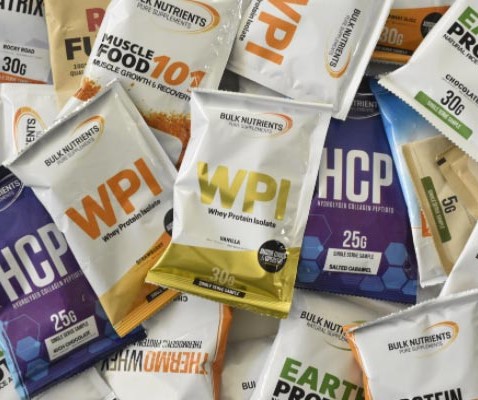
Single-serve sachets and stick packs are pre-portioned powder servings, packaged individually for portability. Designed for life on the move, they’re ideal for gym bags, travel or keeping a serve of WPI or Collagen Protein within reach.
Their strength lies in simplicity. Each serve is pre-measured, removing guesswork and helping maintain dose consistency - particularly when you’re away from your usual setup.
The trade-off is packaging efficiency. Compared to larger multi-serve formats, sachets use more material per gram of product, which can increase cost per serve and waste over time. For occasional use, they’re practical. For daily supplementation at home, multi-serve packs often provide stronger long-term value.
Gummies
Gummies are rapidly expanding in popularity - in Asia-Pacific, the format was worth US$6.9 billion in 2024 and is forecast to grow substantially through 2032 as consumers favour easier-to-take formats.
From multivitamins to creatine gummies, chewable formats make supplementation feel more accessible and less clinical.
However, format doesn’t replace fundamentals. Because gummies must maintain texture, stability and flavour, there can be limits on how much active ingredient fits into each piece. Serving size and total daily intake deserve close attention.
As with any supplement, dose accuracy matters. Look for brands that provide transparent testing and clear labelling to ensure what’s on the label aligns with what’s in the product.
Convenience is valuable. Meaningful formulation is essential.

Tablets and Capsules
Tablet and capsule supplements remain among the most widely used delivery formats globally. They’re portable, pre-dosed and stable, making them well suited to vitamins, minerals and herbal extracts where precision and shelf life matter.
While they may not attract the same attention as newer formats, their practicality keeps them relevant. For many nutrients, tablets and capsules provide an efficient way to deliver clinically meaningful doses without added sugars, flavours or liquid volume.
Sometimes simple works.
Energy Gels
Energy gels are a staple in endurance sport, designed to deliver rapidly absorbed carbohydrates during prolonged activity. Their semi-liquid format allows for quick consumption and efficient digestion when maintaining blood glucose becomes critical during long sessions or race conditions.
They’re a specialised delivery system built for performance under fatigue.
For most people, gels aren’t an everyday supplement format. For endurance athletes, they serve a clear purpose, reinforcing that format should match function.
Ready-to-Drink (RTD) & Functional Shots
RTDs and functional shots are built for immediacy. No scooping. No mixing. Just open and consume.
Their appeal lies in speed and simplicity, aligning with on-the-go nutrition trends. For commuters, shift workers or those training between commitments, that ease can support consistency.
The key consideration is value. Because RTDs are pre-mixed, they include added liquid volume, packaging and transport weight compared to concentrated powders. This can influence cost per serve and environmental footprint.
For some, that trade-off is worthwhile. For long-term daily supplementation, concentrated formats may offer greater flexibility and efficiency.
Format should support the routine, not define it.

The Cultural Shift: From Habit to Ritual
Everyday routines are increasingly being framed as “wellness rituals”. What might once have been simple habits - making tea, washing your face, stretching before bed - are now positioned as intentional moments of self-care.
For some, that’s a five-step skincare routine before lights out. For others, it’s a slow morning coffee or matcha ritual before the day begins. It might be laying out gym clothes the night before or prepping meals for the week ahead.
The specifics vary, but the principle is the same: a repeatable sequence that signals what comes next.
Research in lifestyle medicine shows that structured routines support long-term adherence to health behaviours. When actions are anchored to a consistent cue, they’re more likely to become automatic over time.
In that context, supplementation can become part of the ritual. Taking a pre-workout before the gym signals that training is about to begin. A post-training shake marks recovery. A nightly supplement signals wind-down. Over time, repetition turns intention into habit -and habit drives consistency.
What Actually Matters When Choosing a Supplement Format
Trends evolve. Packaging gets sleeker. But the criteria for choosing a supplement remain consistent.
When evaluating any format, the same fundamentals apply:
- Cost per serve
- Clinically meaningful dosing
- Accuracy and flexibility
- Environmental impact
- Long-term sustainability
Format is delivery. The real question is whether that delivery supports your goals consistently, affordably and responsibly.

Cost Per Serve: Why It Adds Up
Cost per serve is one of the most practical ways to compare supplement formats — particularly for products taken daily.
Multi-serve powders typically offer strong value per gram because they minimise packaging and avoid the added freight costs of liquid. Concentrated formats mean you’re primarily paying for active ingredients rather than transport weight or single-use materials.
For everyday staples like WPC, WPI and Creatine Monohydrate, even small differences in cost per serve compound over months and years.
Convenience has value. But when supplementation is long term, affordability becomes part of sustainability.
Dose Accuracy & Flexibility
One advantage of powder-based supplements is dosing control.
Research on protein supplementation commonly references intake relative to body weight rather than fixed serving sizes. Creatine maintenance protocols typically recommend daily intakes of 3–5 grams, adjusted to individual needs.
Powder formats allow users to scale intake based on training load, body size or goals. You can adjust protein intake, modify creatine dosing or combine your Greens with other ingredients as required.
Pre-dosed formats simplify this process, which can be useful for newer users. However, fixed serving sizes offer less flexibility.
Precision remains one of the most practical advantages of multi-serve supplementation.
Environmental Impact and Packaging Efficiency
Sustainability is an increasingly important part of the supplement conversation, and packaging plays a role.
Single-serve formats generally require more material per gram than bulk packs. Ready-to-drink options also increase transport weight due to added liquid volume. Concentrated powders reduce packaging intensity and freight weight relative to many pre-packaged alternatives.
That doesn’t make convenience formats inherently problematic. Material innovation, refill systems and compostable packaging continue to evolve.
There is also a practical middle ground. Reusable single-serve containers filled from multi-serve powders can provide portability while reducing disposable waste.
Environmental impact is another factor worth weighing alongside cost and dosing.

Where Bulk Nutrients Stands
Supplement formats will continue to evolve, and we monitor those changes closely. Consumer needs shift, and innovation can improve usability when it’s done well.
Our priorities remain consistent: effective dosing, transparent formulation, strong value per serve, practical daily use, and consideration of environmental impact.
If a format enhances usability without compromising efficacy or value, it’s worth exploring.
Innovation should improve supplementation, not distract from what makes it effective.
Trends inform what we watch. Evidence and practicality guide what we do.
Trends Change. Principles Don’t
The supplement industry will continue to evolve. New formats will launch, packaging will shift and convenience will improve.
What doesn’t change are the fundamentals: effective dosing, consistent use, strong value per serve and long-term sustainability.
Whether you’re scooping from a bag of Protein Water, popping a sample pack into your gym bag or chewing on a few Creatine Gummies, the objective remains the same - choose a format that fits your routine without compromising dose integrity or practicality.
Results don’t come from the packaging. They come from what’s inside - and how consistently you use it.

Nick is Bulk's Customer Service team's Technical Support Officer.
Which is our way of saying he's the guy whose job it is to answer your obscenely technical supplement questions.
More about Nick TelescaReferences:
- https://www.grandviewresearch.com/market-trends/nutritional-supplements-market-emerging-trend-analysis
- https://www.datamintelligence.com/research-report/asia-pacific-gummy-supplements-market
- Kozlowski KF, Ferrentino-DePriest A, Cerny F. Effects of Energy Gel Ingestion on Blood Glucose, Lactate, and Performance Measures During Prolonged Cycling. J Strength Cond Res. 2021 Nov 1;35(11):3111-3119. doi: 10.1519/JSC.0000000000003297. PMID: 31977833. https://pubmed.ncbi.nlm.nih.gov/31977833/
- Arlinghaus KR, Johnston CA. The Importance of Creating Habits and Routine. Am J Lifestyle Med. 2018 Dec 29;13(2):142-144. doi: 10.1177/1559827618818044. PMID: 30800018; PMCID: PMC6378489. https://pmc.ncbi.nlm.nih.gov/articles/PMC6378489/
- Morton RW, Murphy KT, McKellar SR, Schoenfeld BJ, Henselmans M, Helms E, Aragon AA, Devries MC, Banfield L, Krieger JW, Phillips SM. A systematic review, meta-analysis and meta-regression of the effect of protein supplementation on resistance training-induced gains in muscle mass and strength in healthy adults. Br J Sports Med. 2018 Mar;52(6):376-384. doi: 10.1136/bjsports-2017-097608. Epub 2017 Jul 11. Erratum in: Br J Sports Med. 2020 Oct;54(19):e7. doi: 10.1136/bjsports-2017-097608corr1. PMID: 28698222; PMCID: PMC5867436. https://pubmed.ncbi.nlm.nih.gov/28698222/
- Naderi A, de Oliveira EP, Ziegenfuss TN, Willems MT. Timing, Optimal Dose and Intake Duration of Dietary Supplements with Evidence-Based Use in Sports Nutrition. J Exerc Nutrition Biochem. 2016 Dec 31;20(4):1-12. doi: 10.20463/jenb.2016.0031. PMID: 28150472; PMCID: PMC5545206. https://pmc.ncbi.nlm.nih.gov/articles/PMC5545206/