

Why Fibre Matters More Than Ever in High-Protein Diets

Australia’s Fibre Gap Is Bigger Than You Think
Despite growing interest in health and nutrition, most Australians still aren’t getting enough fibre.
Australian guidelines recommend around 25g of fibre per day for women and 30g per day for men, yet average intakes remain well below those targets.
That gap matters.
Fibre does far more than support digestive regularity. Adequate fibre intake is associated with digestive health, appetite regulation, healthy blood sugar response, cholesterol management and support for the gut microbiome.
Modern eating habits can make the gap worse. Ultra-processed convenience foods, lower fruit and vegetable intake, and heavily protein-focused diets may all reduce fibre consumption - especially when wholegrains, legumes and other plant foods start disappearing from the plate.
Ironically, some of the most nutrition-conscious people may be the ones missing out.
Lean meats, rice and shakes can help hit protein targets, but if fibre-rich foods keep taking a back seat, digestion and overall diet quality can suffer over time.

What Fibre Does in the Body
Fibre is a type of carbohydrate the body can’t fully digest. Instead of being broken down for energy, it moves through the digestive system and supports key functions along the way.
There are two main types of dietary fibre:
Soluble Fibre
Soluble fibre dissolves in water and forms a gel-like substance in the gut. It helps slow digestion, support fullness, assist healthy blood sugar responses, support cholesterol management and feed beneficial gut bacteria.
Insoluble Fibre
Insoluble fibre doesn’t dissolve in water. It adds bulk to stool and helps food move through the digestive tract, supporting regularity and bowel health.
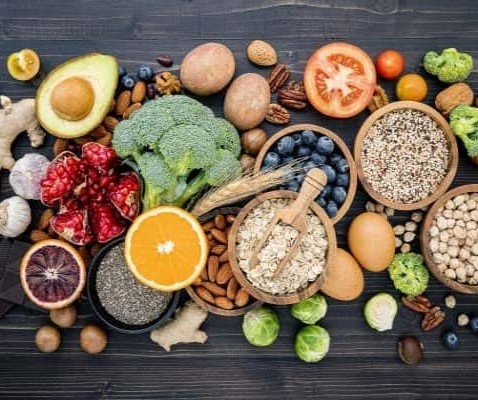
Most fibre-rich foods contain a mix of both types, including oats, legumes, fruit, vegetables, nuts, seeds and wholegrains - which is why variety matters.
The Gut Health Conversation Is Getting Louder
Gut health has moved well beyond wellness buzzword territory. Today, it’s part of the bigger conversation around digestion, immunity, metabolism and long-term wellbeing.
At the centre is the gut microbiome - the community of bacteria and microorganisms living in the digestive tract. Diet is one of the biggest influences on this microbiome, and fibre plays a key role.
Certain fibres act as fuel for beneficial gut bacteria. When fermented, they produce short-chain fatty acids, which may help support gut barrier function and overall digestive health.
Put simply: fibre helps feed the good bugs.
No single nutrient is a magic fix, but when it comes to gut health, fibre does some serious heavy lifting.
Why High-Protein Diets Can Backfire Without Fibre
Protein and fibre aren’t competing macros. They work best as a team.
Protein supports muscle growth, recovery and satiety, while fibre supports digestion, gut health and longer-lasting fullness. The issue is that protein-focused diets can sometimes push fibre-rich foods off the plate.
This often happens when oats, legumes, fruit, vegetables and wholegrains are reduced or replaced with lean meats, shakes and low-carb convenience foods.
Over time, low fibre intake may contribute to digestive discomfort, bloating, constipation, less satisfying meals and reduced gut microbiome diversity.
That doesn’t mean high-protein eating is bad. Far from it. It just means balance matters.
A protein shake without fibre isn’t a problem. But if your diet is mostly protein bars, lean meats and low-fibre convenience foods, your gut may start asking for more variety.
Think of protein as the builder and fibre as the maintenance crew. For performance, digestion and long-term wellbeing, you want both on the payroll.
Fibre and Long-Term Health
Fibre’s benefits go well beyond digestion.
Higher fibre intakes have been associated with better cardiovascular health, healthier cholesterol levels, improved blood sugar management and a reduced risk of several long-term health conditions.
Researchers are also exploring the relationship between diet quality, gut health and bowel health. Rising rates of bowel cancer in younger adults have become a growing area of discussion internationally, and while the causes are complex, dietary patterns, low fibre intake and overall diet quality are being investigated as potential contributing factors.
Fibre isn’t a cure-all, and no single nutrient can guarantee better health outcomes. But it does reinforce an important point: long-term health isn’t built on protein intake alone.
Nutrition trends often focus on what to add more of. Fibre is a reminder to check what may be missing.
Signs You Might Need More Fibre
Most people don’t track fibre the way they track protein, so low intake can be easy to miss.
You may benefit from increasing your fibre intake if your digestion feels sluggish, your bowel movements are irregular, or you often feel hungry soon after eating.
It may also be worth checking your intake if your diet is heavy on protein and convenience foods, but light on fruit, vegetables, wholegrains, legumes and other plant foods.
Of course, digestive symptoms can have many causes, so fibre isn’t always the full story. But if your diet is high in protein and low in plants, fibre could be a smart place to start.
Small, consistent additions can help close the gap without turning your routine upside down.

Easy Ways to Increase Fibre Without Reinventing Your Diet
If fibre makes you picture chewing plain bran flakes in silence, relax. Boosting your intake can be much easier and tastier than that.
Start by adding fibre-rich foods to meals you already enjoy. Add berries to protein oats, throw spinach into smoothies, mix beans or lentils into mince, soups or salads, add grated carrot, zucchini or mushrooms to pasta sauces, or sprinkle nuts, seeds or chia over yoghurt, cereal or shakes.
Tiny upgrades still count. Over time, these small changes can help increase fibre intake without making your diet feel like a full-time admin job.
Don’t Fear Carbohydrates
Some people accidentally fibre-starve themselves by cutting carbs too aggressively.
The catch? Many high-fibre foods are carbohydrates. Oats, fruit, legumes, vegetables and wholegrains provide fibre, along with vitamins, minerals and beneficial plant compounds.
So while reducing highly processed carbs may support some nutrition goals, cutting out fibre-rich carbs can leave a pretty big gap.
Not all carbs are nutritional villains plotting against your abs. Some are doing your gut a serious favour.
Increase Fibre Gradually
Going from very low fibre to very high fibre overnight can be a rough adjustment for your gut.
Increasing fibre too quickly can lead to bloating, gas or digestive discomfort, especially if your gut isn’t used to it.
A slower approach usually works best. Add fibre-rich foods gradually, drink enough water and give your digestive system time to adjust.
Your gut likes a gentle introduction. Not nutritional shock therapy.

Convenient Ways to Boost Fibre Intake
Whole foods should form the foundation of your fibre intake, but convenience matters too. Busy schedules, high-protein eating and on-the-go meals can make fibre targets harder to hit.
A dedicated fibre supplement like Tri Fibre+ can help add fibre to shakes, smoothies or meals when intake is falling short, while Digestive Fusion can fit into a broader gut-health routine alongside a balanced, fibre-rich diet.
Convenient options can also help when whole-food meals aren’t practical. Total Meal Replacement and Protein Bars offer ways to pair protein with fibre, rather than focusing on protein alone.
Fibre doesn’t need a full lifestyle rebrand. Sometimes, it just needs a few smarter defaults.
Fibre Might Not Be Trendy - But Your Gut Doesn’t Care
Protein isn’t going anywhere, and it shouldn’t. It remains important for performance, recovery, satiety and overall nutrition.
But the health conversation is evolving. More people are thinking beyond single macros and looking at digestion, gut health, energy, appetite and long-term wellbeing.
That’s where fibre deserves more attention.
It may not be the loudest nutrient in the room, but it plays a major role behind the scenes - supporting digestive health, helping you feel fuller for longer and feeding beneficial gut bacteria.
Protein may have built the hype, but fibre helps keep the system running.
And for a nutrient that specialises in support work, that feels pretty on brand.

Nick is Bulk's Customer Service team's Technical Support Officer.
Which is our way of saying he's the guy whose job it is to answer your obscenely technical supplement questions.
More about Nick TelescaReferences:
- Fayet-Moore F, Cassettari T, Tuck K, McConnell A, Petocz P. Dietary Fibre Intake in Australia. Paper I: Associations with Demographic, Socio-Economic, and Anthropometric Factors. Nutrients. 2018 May 11;10(5):599. doi: 10.3390/nu10050599. PMID: 29751656; PMCID: PMC5986479. https://pmc.ncbi.nlm.nih.gov/articles/PMC5986479/
- Alahmari LA. Dietary fiber influence on overall health, with an emphasis on CVD, diabetes, obesity, colon cancer, and inflammation. Front Nutr. 2024 Dec 13;11:1510564. doi: 10.3389/fnut.2024.1510564. PMID: 39734671; PMCID: PMC11671356. https://pmc.ncbi.nlm.nih.gov/articles/PMC11671356/
- Guan ZW, Yu EZ, Feng Q. Soluble Dietary Fiber, One of the Most Important Nutrients for the Gut Microbiota. Molecules. 2021 Nov 11;26(22):6802. doi: 10.3390/molecules26226802. PMID: 34833893; PMCID: PMC8624670. https://pmc.ncbi.nlm.nih.gov/articles/PMC8624670/
- Daley SF, Shreenath AP. The Role of Dietary Fiber in Health Promotion and Disease Prevention: A Practical Guide for Clinicians. [Updated 2025 Dec 1]. In: StatPearls [Internet]. Treasure Island (FL): StatPearls Publishing; 2026 Jan-. https://www.ncbi.nlm.nih.gov/books/NBK559033/
- Zhang P. Influence of Foods and Nutrition on the Gut Microbiome and Implications for Intestinal Health. Int J Mol Sci. 2022 Aug 24;23(17):9588. doi: 10.3390/ijms23179588. PMID: 36076980; PMCID: PMC9455721. https://pmc.ncbi.nlm.nih.gov/articles/PMC9455721/
- Li Y, Huang Y, Liang H, Wang W, Li B, Liu T, Huang Y, Zhang Z, Qin Y, Zhou X, Wang R, Huang T. The roles and applications of short-chain fatty acids derived from microbial fermentation of dietary fibers in human cancer. Front Nutr. 2023 Aug 8;10:1243390. doi: 10.3389/fnut.2023.1243390. PMID: 37614742; PMCID: PMC10442828. https://pmc.ncbi.nlm.nih.gov/articles/PMC10442828/
- Fu L, Zhang G, Qian S, Zhang Q, Tan M. Associations between dietary fiber intake and cardiovascular risk factors: An umbrella review of meta-analyses of randomized controlled trials. Front Nutr. 2022 Sep 12;9:972399. doi: 10.3389/fnut.2022.972399. PMID: 36172520; PMCID: PMC9511151. https://pubmed.ncbi.nlm.nih.gov/36172520/
- Puzzono M, Mannucci A, Grannò S, Zuppardo RA, Galli A, Danese S, Cavestro GM. The Role of Diet and Lifestyle in Early-Onset Colorectal Cancer: A Systematic Review. Cancers (Basel). 2021 Nov 25;13(23):5933. doi: 10.3390/cancers13235933. PMID: 34885046; PMCID: PMC8657307. https://pmc.ncbi.nlm.nih.gov/articles/PMC8657307/



Green Fusion
$30.00
Total Meal Replacement
$42.00
Tri Fibre+
$22.00
Red Fusion
$30.00