

TUDCA: The Next-Gen Compound for Liver Support

What is TUDCA?
TUDCA is a water-soluble bile salt your body already makes, just in tiny amounts. Think of it as one of your liver’s behind-the-scenes assistants — the kind that steps in quietly and fixes little issues before they become actual problems.
TUDCA is especially good at helping cells cope under pressure. When a cell starts to get overwhelmed — from toxins, inflammation or day-to-day stress — TUDCA helps restore balance so the cell can keep doing its job properly.
Why TUDCA Is Considered “Next-Generation” Liver Support
Many liver ingredients are fantastic antioxidants or detox supporters, but TUDCA works deeper than that.
Instead of supporting the liver from the outside, TUDCA protects the machinery inside liver cells. It helps reduce stress at the source, supports mitochondrial health, balances bile acids and reinforces the gut environment that feeds into liver function.
This combination of liver support, gut integrity, metabolic balance and cellular protection is why TUDCA is often called “next-generation.” It protects where it counts most — the cells that keep your liver humming.
How TUDCA Supports a Hard-Working Liver
When people first hear about TUDCA, the conversation usually starts with the liver — and for good reason. One of its best-known roles is helping maintain healthy bile flow.
Good bile flow is essential for digesting fats comfortably and efficiently moving waste out of the body. Research shows that TUDCA helps keep this process smooth, even when inflammation or dietary stress tries to disrupt things.
TUDCA also supports the liver when it’s feeling overwhelmed. Inside every liver cell is a busy little hub that can get overworked when you’re dealing with toxins, inflammation, a heavy diet, or even just modern life. Research shows TUDCA helps calm that internal stress response and gives liver cells the breathing room they need to recover and function normally again — almost like giving your liver a moment to reset before getting back to work.
What’s especially exciting is research suggesting TUDCA may support the liver’s natural repair processes. Some studies show it may influence pathways involved in regeneration and even help reduce scarring. When the liver is under long-term pressure and starting to show subtle signs of wear, TUDCA may help gently guide it back toward a healthier state.
These benefits aren’t just theoretical. Clinical trials in liver cirrhosis found TUDCA both effective and safe, and other human studies in primary biliary cirrhosis showed meaningful improvements in liver-related markers. For a compound your body already produces, that’s a remarkable spread of liver-focused support.
Cellular Protection Where It Counts
Inside every cell is a structure called the endoplasmic reticulum — essentially the cell’s quality-control centre. When this area gets overloaded, the whole cell becomes stressed and can’t function properly. Scientists call this ER stress.
TUDCA helps reduce that internal stress, which is why it’s often highlighted as a powerful cellular-protective nutrient.
Beyond that, research shows TUDCA can reduce oxidative stress, support autophagy (your body’s natural clean-up process) and protect cells from programmed breakdown. These protective effects have been shown in models of spinal cord injury, retinal damage, and even stroke.
It’s a bit like giving your cells a buffer zone — more stability, more resilience and more time to recover.

Why TUDCA Matters for the Gut–Liver Axis
One of the biggest conversations in health right now is the gut–liver axis. When the gut barrier becomes irritated or “leaky,” the liver often ends up absorbing the impact. TUDCA appears to support both ends of this relationship.
Several studies show TUDCA helps keep the gut lining strong, making it harder for inflammatory particles to reach the liver. In one study using piglets, TUDCA improved gut barrier integrity by influencing part of the signalling system that keeps the gut wall tight. Other research shows improvements in gut bacteria balance and reduction in inflammation throughout the gut.
When your gut barrier is strong, your liver’s workload drops — and when your liver is performing well, the gut environment becomes calmer. TUDCA sits neatly in the centre, helping both sides stay in sync.
Mitochondrial and Metabolic Support
While TUDCA’s liver benefits are the main headline, its effects on metabolic and mitochondrial health are gaining attention.
Human trials suggest TUDCA may improve insulin sensitivity in both the liver and muscle, even though its impact on fat tissue seems more limited. In animal research, TUDCA improved glucose tolerance and even reduced fat gain in high-fat diet models.
There’s also growing interest in how TUDCA affects mitochondria — the tiny powerhouses inside cells. One study found TUDCA helped create a healthier environment for neural stem cells to grow and renew, partly by supporting mitochondrial function. In everyday terms: TUDCA helped conditions inside the cell that encourage the development of new brain cells.
These insights point to metabolic benefits that go well beyond liver support, which is why TUDCA often appears in discussions around longevity and cellular health.

TUDCA’s Emerging Neuroprotective Potential
You’d expect TUDCA to benefit the liver. But the brain? That’s where researchers were pleasantly surprised.
A growing collection of studies highlight TUDCA’s potential in neurological support, thanks to its antioxidant, anti-inflammatory and stress-reducing effects. Reviews covering conditions like Parkinson’s and Alzheimer’s show early but promising signs.
In Parkinson’s models, for example, TUDCA helped protect brain cells, and worked even better when combined with CoQ10 and creatine — each ingredient contributing its own benefits in a complementary way.
Meanwhile, in Alzheimer’s research, TUDCA reduced internal cell stress and lowered the build-up of amyloid proteins in animal models — two major contributors to the progression of the condition.
It’s still early days, but this area of research is one of the most exciting developments in TUDCA science.
A Modern Ritual for Stronger, Smarter Liver Support
TUDCA is an impressive little compound with an equally impressive body of research behind it. From supporting bile flow to easing cellular stress, strengthening the gut barrier, improving metabolic markers and showing real promise in neurological models, it stands out as one of the most well-rounded liver-support nutrients available.
While some areas of TUDCA research are still unfolding — especially outside the liver — interest in this compound is only growing. For anyone looking to support their liver on a deeper, more cellular level, TUDCA is hard to overlook.
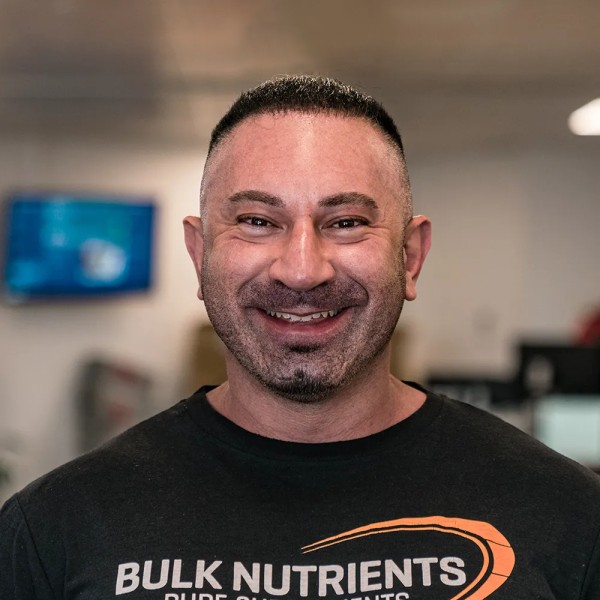
Nick is Bulk's Customer Service team's Technical Support Officer.
Which is our way of saying he's the guy whose job it is to answer your obscenely technical supplement questions.
More about Nick TelescaReferences:
- Kusaczuk M. Tauroursodeoxycholate-Bile Acid with Chaperoning Activity: Molecular and Cellular Effects and Therapeutic Perspectives. Cells. 2019 Nov 20;8(12):1471. doi: 10.3390/cells8121471. PMID: 31757001; PMCID: PMC6952947. https://pubmed.ncbi.nlm.nih.gov/31757001/
- Van den Bossche, L., Borsboom, D., Devriese, S., Van Welden, S., Holvoet, T., Devisscher, L., Hindryckx, P., De Vos, M., & Laukens, D. (2017). Tauroursodeoxycholic acid protects bile acid homeostasis under inflammatory conditions and dampens Crohn's disease-like ileitis. Laboratory Investigation, 97(5), 519-529. https://www.sciencedirect.com/science/article/pii/S0023683722007188
- Ochiai T, Nagayama T, Matsui K, Amano K, Sano T, Wakabayashi T, Iwatsubo T. Tauroursodeoxycholic Acid Attenuates Diet-Induced and Age-Related Peripheral Endoplasmic Reticulum Stress and Cerebral Amyloid Pathology in a Mouse Model of Alzheimer's Disease. J Prev Alzheimers Dis. 2021;8(4):483-494. doi: 10.14283/jpad.2021.33. PMID: 34585224; PMCID: PMC12280779. https://pmc.ncbi.nlm.nih.gov/articles/PMC12280779/
- Bai C, Song X, Yan J, Xu J, Zhou Y, Sun Z, Zheng Q, Zhang Y, Chen R, Jin X, Shao Y, Xie Y, Yang L, Zhong F, Zhang Y, Li J, Li R, Yan S, Li X. Tauroursodeoxycholic Acid Induces Liver Regeneration and Alleviates Fibrosis Through GATA3 Activation. Biomedicines. 2025 Apr 9;13(4):910. doi: 10.3390/biomedicines13040910. PMID: 40299532; PMCID: PMC12024728. https://pubmed.ncbi.nlm.nih.gov/40299532/
- Pan XL, Zhao L, Li L, Li AH, Ye J, Yang L, Xu KS, Hou XH. Efficacy and safety of tauroursodeoxycholic acid in the treatment of liver cirrhosis: a double-blind randomized controlled trial. J Huazhong Univ Sci Technolog Med Sci. 2013 Apr;33(2):189-194. doi: 10.1007/s11596-013-1095-x. Epub 2013 Apr 17. PMID: 23592128. https://pubmed.ncbi.nlm.nih.gov/23592128/
- Crosignani A, Battezzati PM, Setchell KD, Invernizzi P, Covini G, Zuin M, Podda M. Tauroursodeoxycholic acid for treatment of primary biliary cirrhosis. A dose-response study. Dig Dis Sci. 1996 Apr;41(4):809-15. doi: 10.1007/BF02213140. PMID: 8674405. https://pubmed.ncbi.nlm.nih.gov/8674405/
- Hou Y, Luan J, Huang T, Deng T, Li X, Xiao Z, Zhan J, Luo D, Hou Y, Xu L, Lin D. Tauroursodeoxycholic acid alleviates secondary injury in spinal cord injury mice by reducing oxidative stress, apoptosis, and inflammatory response. J Neuroinflammation. 2021 Sep 20;18(1):216. doi: 10.1186/s12974-021-02248-2. PMID: 34544428; PMCID: PMC8454169. https://pmc.ncbi.nlm.nih.gov/articles/PMC8454169/
- Zubieta D, Warden C, Bhattacharya S, Brantley MA Jr. Tauroursodeoxycholic Acid Confers Protection Against Oxidative Stress via Autophagy Induction in Retinal Pigment Epithelial Cells. Curr Issues Mol Biol. 2025 Mar 26;47(4):224. doi: 10.3390/cimb47040224. PMID: 40699623; PMCID: PMC12025947. https://pmc.ncbi.nlm.nih.gov/articles/PMC12025947/
- Rodrigues CM, Sola S, Nan Z, Castro RE, Ribeiro PS, Low WC, Steer CJ. Tauroursodeoxycholic acid reduces apoptosis and protects against neurological injury after acute hemorrhagic stroke in rats. Proc Natl Acad Sci U S A. 2003 May 13;100(10):6087-92. doi: 10.1073/pnas.1031632100. Epub 2003 Apr 29. PMID: 12721362; PMCID: PMC156330. https://pmc.ncbi.nlm.nih.gov/articles/PMC156330/
- Song M, Zhang F, Fu Y, Yi X, Feng S, Liu Z, Deng D, Yang Q, Yu M, Zhu C, Zhu X, Wang L, Gao P, Shu G, Ma X, Jiang Q, Wang S. Tauroursodeoxycholic acid (TUDCA) improves intestinal barrier function associated with TGR5-MLCK pathway and the alteration of serum metabolites and gut bacteria in weaned piglets. J Anim Sci Biotechnol. 2022 Jun 8;13(1):73. doi: 10.1186/s40104-022-00713-3. PMID: 35672805; PMCID: PMC9175448. https://pmc.ncbi.nlm.nih.gov/articles/PMC9175448/
- Luo L, Zhao Y, Zhang G, Dong S, Xu Y, Shi H, Zhang M, Liu X, Wang S, Luo H, Jing W. Tauroursodeoxycholic Acid Reverses Dextran Sulfate Sodium-Induced Colitis in Mice via Modulation of Intestinal Barrier Dysfunction and Microbiome Dysregulation. J Pharmacol Exp Ther. 2024 Jun 21;390(1):116-124. doi: 10.1124/jpet.123.002020. PMID: 38816229. https://pubmed.ncbi.nlm.nih.gov/38816229/
- Van den Bossche L, Borsboom D, Devriese S, Van Welden S, Holvoet T, Devisscher L, Hindryckx P, De Vos M, Laukens D. Tauroursodeoxycholic acid protects bile acid homeostasis under inflammatory conditions and dampens Crohn's disease-like ileitis. Lab Invest. 2017 May;97(5):519-529. doi: 10.1038/labinvest.2017.6. Epub 2017 Feb 6. PMID: 28165466. https://pubmed.ncbi.nlm.nih.gov/28165466/
- Kars M, Yang L, Gregor MF, Mohammed BS, Pietka TA, Finck BN, Patterson BW, Horton JD, Mittendorfer B, Hotamisligil GS, Klein S. Tauroursodeoxycholic Acid may improve liver and muscle but not adipose tissue insulin sensitivity in obese men and women. Diabetes. 2010 Aug;59(8):1899-905. doi: 10.2337/db10-0308. Epub 2010 Jun 3. PMID: 20522594; PMCID: PMC2911053. https://pubmed.ncbi.nlm.nih.gov/20522594/
- Dos Reis Araujo T, Roberta Rodrigues Muniz M, Lourençoni Alves B, Monali Barreto Dos Santos L, Fernandes Bonfim M, Alves da Silva Junior J, Franciesco Vettorazzi J, Cesar Zoppi C, Magalhães Carneiro E. Tauroursodeoxycholic acid improves glucose tolerance and reduces adiposity in normal protein and malnourished mice fed a high-fat diet. Food Res Int. 2022 Jun;156:111331. doi: 10.1016/j.foodres.2022.111331. Epub 2022 May 6. PMID: 35651081. https://pubmed.ncbi.nlm.nih.gov/35651081/
- Xavier JM, Morgado AL, Rodrigues CM, Solá S. Tauroursodeoxycholic acid increases neural stem cell pool and neuronal conversion by regulating mitochondria-cell cycle retrograde signaling. Cell Cycle. 2014;13(22):3576-89. doi: 10.4161/15384101.2014.962951. PMID: 25483094; PMCID: PMC4613652. https://pubmed.ncbi.nlm.nih.gov/25483094/
- Zangerolamo L, Vettorazzi JF, Rosa LRO, Carneiro EM, Barbosa HCL. The bile acid TUDCA and neurodegenerative disorders: An overview. Life Sci. 2021 May 1;272:119252. doi: 10.1016/j.lfs.2021.119252. Epub 2021 Feb 23. PMID: 33636170. https://pubmed.ncbi.nlm.nih.gov/33636170/
- Khalaf K, Tornese P, Cocco A, Albanese A. Tauroursodeoxycholic acid: a potential therapeutic tool in neurodegenerative diseases. Transl Neurodegener. 2022 Jun 4;11(1):33. doi: 10.1186/s40035-022-00307-z. PMID: 35659112; PMCID: PMC9166453. https://pubmed.ncbi.nlm.nih.gov/35659112/
- Shtilbans A, Reintsch WE, Piscopo VEC, Krahn AI, Durcan TM. Combination of tauroursodeoxycholic acid, co-enzyme Q10 and creatine demonstrates additive neuroprotective effects in in-vitro models of Parkinson's disease. Front Neurosci. 2024 Dec 23;18:1492028. doi: 10.3389/fnins.2024.1492028. PMID: 39764390; PMCID: PMC11701167. https://pmc.ncbi.nlm.nih.gov/articles/PMC11701167/
- Ochiai T, Nagayama T, Matsui K, Amano K, Sano T, Wakabayashi T, Iwatsubo T. Tauroursodeoxycholic Acid Attenuates Diet-Induced and Age-Related Peripheral Endoplasmic Reticulum Stress and Cerebral Amyloid Pathology in a Mouse Model of Alzheimer's Disease. J Prev Alzheimers Dis. 2021;8(4):483-494. doi: 10.14283/jpad.2021.33. PMID: 34585224; PMCID: PMC12280779. https://pubmed.ncbi.nlm.nih.gov/34585224/