

High Protein Diet? Here’s Why Fibre Should Be Your Next Focus

Why Is Fibre Important on a High-Protein Diet?
Protein earns its reputation for good reason. It helps support muscle growth, recovery, fullness, and overall body composition goals. Whether you’re training for strength, chasing performance, or just trying to stay satisfied between meals, getting enough protein matters.
But there’s a catch.
Many high-protein diets can unintentionally push fibre to the sidelines. Lean meats, protein shakes, bars, and low-carb convenience foods can all help boost protein intake, but they don’t always bring much fibre to the table.
The result? You might be smashing your protein goals while still dealing with sluggish digestion, inconsistent energy, hunger swings, or feeling a bit… off.
That’s where fibre steps in. It helps round out a protein-focused diet by supporting digestive health, regularity, steadier energy, and longer-lasting fullness.

What Does Fibre Actually Do In The Body?
Fibre doesn’t usually get the flashy marketing campaigns. Nobody’s dry-scooping psyllium husk before a workout montage.
But fibre plays a massive role in how you feel day to day.
Dietary fibre is the part of plant foods that your body can’t fully digest. Instead of being broken down like protein, fat or carbohydrates, it moves through the digestive system and helps support digestive health, regular bowel movements, and feelings of fullness.
Some types of fibre also slow the digestion and absorption of carbohydrates, which may help support steadier blood glucose responses after meals.
It also helps feed beneficial gut bacteria, which is why fibre is such a big deal for gut health. Less glamour, more gut-level greatness.
And most Australians still aren’t getting enough of it. Current fibre intake averages well below recommended daily targets, leaving plenty of room for improvement.
Can Fibre Help With Hunger and Energy Levels?
Ever had a big lunch, felt amazing for 20 minutes, then wanted to nap under your desk by 2pm?
Meals high in refined carbohydrates and low in fibre tend to digest quickly, which can lead to a faster rise in blood glucose after eating. Your body responds by releasing insulin, and for some people, that rapid rise and fall can leave them feeling flat, foggy, or suddenly snack-curious.
By slowing digestion and carbohydrate absorption, fibre can help support a steadier release of energy throughout the day. That means high-fibre meals may help you feel fuller for longer, support more consistent energy, and make the 3pm pantry raid a little less dramatic.

What Is The Gut-Brain Axis?
Your digestive system isn’t just about breaking down food and hoping for the best. The gut and brain are constantly communicating through what’s known as the gut-brain axis.
Emerging research suggests gut health may influence mood, cognition, stress responses, and overall wellbeing. It’s not as simple as “eat fibre, become a genius,” sadly. But it does mean your gut may have more influence than we once thought.
One of the biggest nutrition factors involved in gut health? Fibre.
Certain types of fibre act as prebiotics, which means they help feed beneficial gut bacteria. These bacteria produce compounds, including short-chain fatty acids, that are linked to digestive health, immune function, and the health of the gut barrier.
A healthy, diverse gut microbiome is increasingly associated with positive health outcomes across multiple systems in the body. So yes, your fibre intake may influence more than your bathroom schedule.
Consider it food for thought. Literally.
How Can You Increase Fibre On a High Protein Diet?
If you already have a protein-focused routine, increasing your fibre intake can be surprisingly simple. Small swaps can do some seriously heavy lifting - no barbell required.
Stack Fibre Into Your Existing Routine
Rather than overhauling your whole diet, look for easy ways to add high-fibre foods to meals and snacks you already eat.
Try:
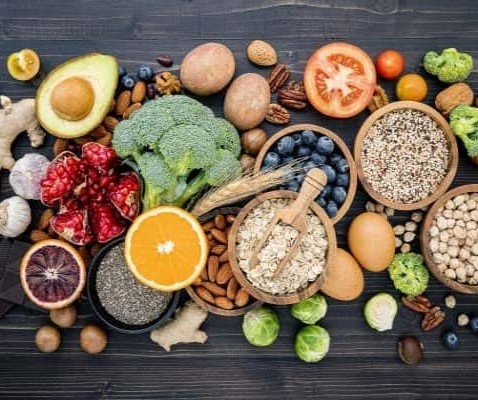
- Adding chia seeds, oats, berries or ground flaxseed to protein smoothies
- Including fruit alongside protein snacks
- Swapping refined carbs for higher-fibre options, like wholegrain bread, wraps, rice or pasta
- Adding greens, beans, lentils or chickpeas to meals where possible
- Pairing protein bars with whole food snacks, rather than relying on bars alone
- Choosing higher-fibre breakfast options, like oats or high-fibre cereal, alongside your usual protein source
- Adding vegetables to meals you already make, from eggs and wraps to rice bowls and pasta
The goal isn’t perfection. It’s a balance.
Start with one or two simple changes, give your gut time to adjust, and build from there.
Why Do Protein and Fibre Work Better Together?
Protein and fibre are a bit of a power pair.
Protein helps support muscle recovery, body composition goals, and feelings of fullness, while fibre helps support digestive health, regularity, and longer-lasting satisfaction after meals. Together, they can make meals feel more balanced, more filling, and a whole lot more useful than a sad desk snack eaten in three bites.
So, once your protein target is sorted, the next step is asking: where can fibre fit without making your routine harder?
That’s where a few smart staples can help.
Tri Fibre+ can be mixed into your usual routine when your fibre intake needs a boost, whether that’s in a smoothie, shake, or whatever fibre-friendly concoction is happening in your shaker.
Digestive Fusion also pairs well with a fibre-conscious diet when you’re looking for extra digestive support as part of your daily routine.
For busier days, Total Meal Replacement can help cover more nutritional bases when a full meal isn’t happening, while Protein Bars are a convenient protein snack when you’re on the move. Pairing them with fruit or another whole food snack can help bring more fibre into the mix.
It’s not about choosing fibre instead of protein. It’s about making your protein-first routine more complete.
If You’re Hitting Your Protein Goal, Fibre’s Your Next Target
Protein deserves the hype, but fibre deserves a seat at the table too - preferably next to something colourful, crunchy, and not entirely made in a shaker.
Performance nutrition isn’t just about what helps you lift heavier or recover faster. It’s also about how you feel between workouts: steady energy, digestive support, regularity, longer-lasting fullness, and supporting your overall health from the inside out.
So, if you’re already hitting your protein target, consider fibre your next focus.

Nick is Bulk's Customer Service team's Technical Support Officer.
Which is our way of saying he's the guy whose job it is to answer your obscenely technical supplement questions.
More about Nick TelescaReferences:
- Carbone JW, Pasiakos SM. Dietary Protein and Muscle Mass: Translating Science to Application and Health Benefit. Nutrients. 2019 May 22;11(5):1136. doi: 10.3390/nu11051136. PMID: 31121843; PMCID: PMC6566799. https://pmc.ncbi.nlm.nih.gov/articles/PMC6566799/
- Daley SF, Shreenath AP. The Role of Dietary Fiber in Health Promotion and Disease Prevention: A Practical Guide for Clinicians. [Updated 2025 Dec 1]. In: StatPearls [Internet]. Treasure Island (FL): StatPearls Publishing; 2026 Jan-. Available from: https://www.ncbi.nlm.nih.gov/books/NBK559033/
- Fayet-Moore F, Cassettari T, Tuck K, McConnell A, Petocz P. Dietary Fibre Intake in Australia. Paper I: Associations with Demographic, Socio-Economic, and Anthropometric Factors. Nutrients. 2018 May 11;10(5):599. doi: 10.3390/nu10050599. PMID: 29751656; PMCID: PMC5986479. https://pmc.ncbi.nlm.nih.gov/articles/PMC5986479/
- Jarvis, P. R., Cardin, J. L., Nisevich-Bede, P. M., & McCarter, J. P. (2023). Continuous glucose monitoring in a healthy population: Understanding the post-prandial glycemic response in individuals without diabetes mellitus. Metabolism, 146, 155640. https://www.sciencedirect.com/science/article/pii/S0026049523002445
- Hervik AK, Svihus B. The Role of Fiber in Energy Balance. J Nutr Metab. 2019 Jan 21;2019:4983657. doi: 10.1155/2019/4983657. PMID: 30805214; PMCID: PMC6360548. https://pmc.ncbi.nlm.nih.gov/articles/PMC6360548/
- Carabotti M, Scirocco A, Maselli MA, Severi C. The gut-brain axis: interactions between enteric microbiota, central and enteric nervous systems. Ann Gastroenterol. 2015 Apr-Jun;28(2):203-209. Erratum in: Ann Gastroenterol. 2016 Apr-Jun;29(2):240. PMID: 25830558; PMCID: PMC4367209. https://pmc.ncbi.nlm.nih.gov/articles/PMC4367209/
- Appleton J. The Gut-Brain Axis: Influence of Microbiota on Mood and Mental Health. Integr Med (Encinitas). 2018 Aug;17(4):28-32. PMID: 31043907; PMCID: PMC6469458. https://pmc.ncbi.nlm.nih.gov/articles/PMC6469458/
- Slavin J. Fiber and prebiotics: mechanisms and health benefits. Nutrients. 2013 Apr 22;5(4):1417-35. doi: 10.3390/nu5041417. PMID: 23609775; PMCID: PMC3705355. https://pmc.ncbi.nlm.nih.gov/articles/PMC3705355/



Green Fusion
$30.00
Total Meal Replacement
$42.00
Tri Fibre+
$22.00
Red Fusion
$30.00